
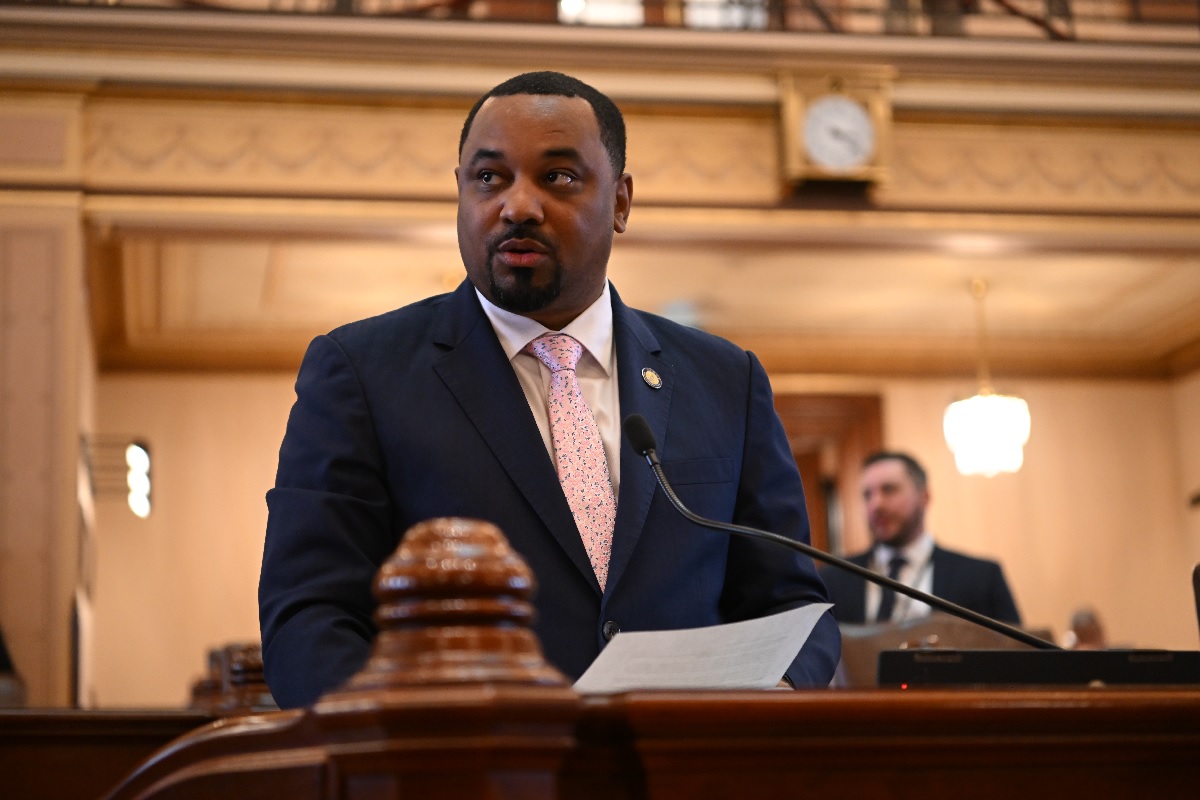
 CHICAGO – Sixteenth District State Senator Willie Preston is introducing a package of legislation to compel the City of Chicago to allow the video gaming terminals that were legalized more than nine months ago, but are being stalled by a lack of licensing.
Preston lays out the rationale for the new laws in a recent Chicago Tribune op-ed, writing:
“Our hospitality industry is hanging on by a thread, especially in the neighborhoods. If this administration is too afraid of Bally’s to act to save the taxpayers and the small businesses of this city, we must act, and we will.”
A link to the op-ed is here. The text of the op-ed is below:
State Sen. Willie Preston: If Chicago won’t act to allow video gaming, the state must step in
“The financial crises threatening Chicago and the small businesses that make our city great are dire and require an all-hands-on-deck approach. This much was clear more than nine months ago, when the City Council approved video gaming terminals, or VGTs.
This type of gaming was legalized statewide in 2009 and has generated billions in revenue for the state and for the host localities. VGTs now generate more tax revenue for the state than the lottery. By conservative estimates, since video gaming was legalized in the state but not in the city, Chicago has lost out on an estimated $500 million in potential tax revenue.
But nine months after legalization, VGTs are still not being allowed by Mayor Brandon Johnson’s administration, even while small restaurant and tavern owners are crying out for help as they get crushed by inflation and other rising costs.
Simply put, the city cannot come to Springfield demanding legislators magically find $150 million for Chicago Public Schools while simultaneously refusing to implement a law that has already passed and would ultimately generate billions of dollars in tax revenue for the city and state.
Chicago’s recalcitrance to allow video gaming is the result of many factors over the years. Most recently, it is being driven by Bally’s Corp., which has made a pretty bold argument — that VGTs are part of the reason it is unable to fulfill its broken promises related to its temporary and in-progress casino projects.
I call this argument bold because the Johnson administration has, for nine months, refused to even license VGT machines and the city refuses to crack down on the copycat and illegal “sweepstakes” machines that have proliferated in gas stations and bars across Chicago.
Bally’s failures are its own. But some of the rationale for the city’s embargo has been echoed by aldermen who cite the potential for small businesses that host VGTs to be burglarized because of the hard cashflow into and out of their establishments. This is a fixable issue and one I take just as seriously as the strain being put on the city’s tax revenues and on neighborhood establishments struggling to get by.
That’s why, in the veto session of the General Assembly, I am proposing an emergency package of legislation to allow a cashless option for VGT operators, establishments, and customers — to eliminate the legitimate fears of burglary and related crimes.
And, more broadly, my legislation would compel the city to finally implement the VGT program in Chicago: We cannot allow one business, in one ward, to dictate policy for an entire city.
Under my proposal, municipalities such as Chicago that have legalized VGTs would be required to establish a licensing process within 60 days of an ordinance’s effective date and review applications within 30 days of receipt. If the municipality fails to meet those deadlines, authority to license VGT operations would transfer to the state of Illinois for establishments that meet the existing legal requirements. The process remains stalled, however, as they wait for the city to review and approve their applications.
Our hospitality industry is hanging on by a thread, especially in the neighborhoods. If this administration is too afraid of Bally’s to act to save the taxpayers and the small businesses of this city, we must act, and we will.”


